
Your First Gig: A Simple Checklist for New Bands
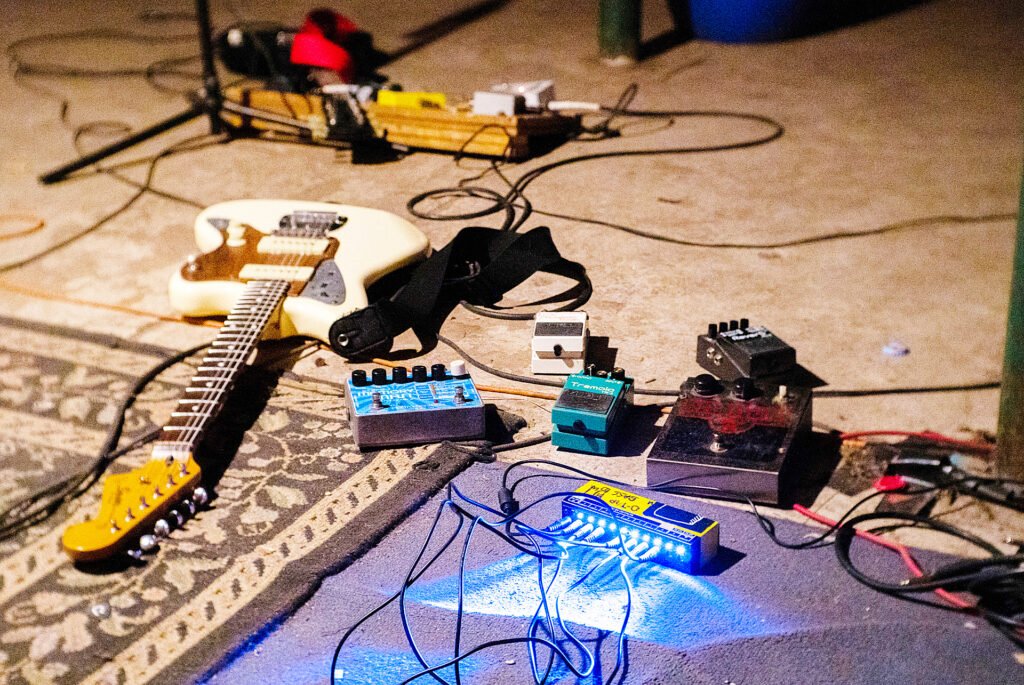
You’ve found your bandmates, rehearsed the songs and finally landed your first gig. Brilliant! Now, before you start dreaming about the encore, there are a few things worth sorting out.
There’s something special about playing your first gig with a new band.
After weeks of rehearsals, forgotten chord changes, arguments about song endings and somebody always turning up without a guitar lead, you’re finally going to play in front of an audience.
Perhaps it’s a local pub, a small music venue, a charity event or a friend’s party.
Whatever the occasion, it’s an exciting moment.
But if you’ve never played a gig before, or it’s been a few years since your last one, there’s quite a bit to think about.
What equipment do you need? Who provides the PA? How long should your set be? And who’s going to remember the extension leads?
Don’t worry. A little preparation goes a long way.
Here’s a straightforward guide to help your first gig run as smoothly as possible.
1. Get the Details from the Venue
Before you start planning your setlist, make sure you know exactly what you’ve agreed to.
A quick conversation with the venue or organiser can save a lot of confusion later.
Find out:
- The date and full address of the venue.
- What time you can arrive and load in.
- Whether there’s a soundcheck and when it takes place.
- What time you’re expected to start and finish playing.
- How many sets you’re expected to perform.
- Whether the venue provides a PA system, microphones or other equipment.
- How much you’ll be paid, if anything, and when payment will be made.
- Whether there’s parking and somewhere to unload equipment.
It’s also worth asking who your contact will be on the day.
And if you’re playing alongside other bands, find out how the running order works and whether you’ll be sharing any equipment.
The more you know beforehand, the fewer surprises you’ll have when you arrive.
2. Agree on Payment Before the Gig
It’s not the most exciting part of being in a band, but it’s important.
If you’re being paid, make sure everybody understands the arrangement.
Is it a fixed fee for the band? A share of ticket sales? Or are you playing for free at a charity event or open mic night?
There’s nothing wrong with any of those arrangements, provided everyone knows what they’re agreeing to.
For paid gigs, confirm the amount, payment method and when you’ll receive it. Getting the details in writing, even in an email, is sensible.
Within the band, decide how any money will be divided.
Will it be split equally? Are you keeping some aside for rehearsal costs or shared equipment?
Sorting these things out early helps avoid awkward conversations later.
And remember to consider expenses such as fuel, parking and equipment hire.
That generous-looking fee might not seem quite so generous once you’ve driven a hundred miles and paid for a van.
3. Make Sure Your Setlist Is Ready
Your first gig isn’t the ideal time to discover that nobody can remember how the third song ends.
Put together a setlist well in advance and make sure everybody has a copy.
Think about the order of the songs.
You might want to start with something familiar and energetic to help everybody settle in.
Try to vary the pace throughout the set, and finish with something strong.
If you’re playing covers, make sure the band agrees on the arrangements, especially if different recordings have different endings or structures.
And don’t forget to time your set.
Ten songs might sound like plenty, but depending on their length, they could last twenty-five minutes or well over an hour.
It’s worth allowing a little time for introductions, tuning and the occasional unexpected delay.
You don’t need to plan every second, but you should have a good idea of how long you’ll be on stage.
4. Rehearse Like You’re Playing the Gig
In the final rehearsal or two, try running through the complete set without stopping.
Play the songs in the correct order, practise the beginnings and endings, and get used to moving from one number to the next.
This is also a good time to work out practical details.
Who’s counting in each song?
Who’s introducing the band?
What happens if somebody breaks a string?
Are there any awkward gaps while the guitarist changes instruments or the singer searches for the next set of lyrics?
You don’t need a perfectly choreographed stage show.
But a little preparation helps everything feel more natural when you’re standing in front of an audience.
And if something goes wrong during rehearsal, that’s useful too.
Better to discover a problem now than halfway through your first gig.
5. Check Your Equipment
Here’s where a simple checklist can save the day.
Before leaving home, make sure you’ve got everything you need.
Instruments and Equipment
- Guitar, bass, keyboards or whatever instrument you play.
- Amplifiers and speaker cabinets, if required.
- Instrument leads and spare cables.
- Pedals, pedalboards and power supplies.
- Guitar or bass straps.
- Picks, drumsticks and other accessories.
- Spare strings and batteries.
- Tuners.
- Microphones and stands, if you’re supplying them.
- Music stands or tablet holders, if needed.
- Any necessary extension leads and suitable power distribution equipment.
- Cases and covers for transporting your gear.
Check with the venue before bringing larger equipment.
If the PA, drum kit or amplifiers are already provided, you may not need to take everything.
For electrical safety, use equipment that’s in good condition, avoid damaged cables and don’t overload sockets.
And if you’re using unfamiliar equipment, allow yourself a little extra setup time.
6. Don’t Forget the Small Stuff
It’s amazing how often the smallest things cause the biggest headaches.
A missing guitar lead, flat battery or forgotten drum key can create a surprising amount of chaos.
It’s worth having a small bag of useful extras.
Think spare picks, strings, batteries, drum keys, gaffer tape, a torch, a pen and a printed setlist.
Bring water, too.
And if you’re playing outdoors, make sure the organiser has suitable arrangements for shelter and electrical equipment. Don’t improvise with mains-powered gear in wet conditions.
You don’t need to carry an entire repair workshop.
Just enough to deal with the common little problems that crop up.
7. Arrive in Plenty of Time
One of the easiest ways to make your first gig stressful is to arrive late.
Allow time for traffic, parking, unloading, setting up and dealing with anything unexpected.
If the venue has given you an arrival time, stick to it.
And if you’re delayed, let the organiser know as soon as possible.
Once you arrive, introduce yourself to the person in charge and find out where to put your equipment.
Try not to block entrances, fire exits or walkways with cases and amplifiers.
A little consideration makes life easier for the venue staff, the audience and the other performers.
8. Make the Most of Your Soundcheck
If you’ve never experienced a soundcheck before, don’t worry.
It’s simply an opportunity to make sure everybody can be heard and the equipment is working properly.
The sound engineer may ask each musician to play individually before getting the whole band to perform part of a song.
Listen carefully to instructions and be patient.
If you can’t hear yourself properly, say so.
If the vocals are getting lost behind the guitars, mention it.
But try to avoid the temptation to solve every problem by turning your amplifier up.
Remember, what sounds good standing next to your amp might sound completely different to somebody at the back of the room.
If there’s a sound engineer, let them help.
And once everything is sounding good, resist the urge to change all your settings five minutes before going on stage.
9. Look After Your Hearing
Live music can be loud, particularly in smaller venues.
Consider wearing proper musician’s earplugs, which are designed to reduce sound levels while allowing you to hear the music more clearly.
Try to keep stage volume under control and avoid standing unnecessarily close to loud speakers.
Your hearing is worth protecting.
After all, you want to enjoy plenty more gigs in the future.
10. What If You Make a Mistake?
You probably will.
Somebody will miss a cue, forget a lyric, play the wrong chord or start a song at completely the wrong tempo.
Welcome to live music!
The important thing is not to panic.
Keep playing if you can, listen to the rest of the band and find your way back into the song.
Most audiences won’t notice half the little mistakes musicians worry about.
And if something goes completely wrong, stop, have a laugh and start again.
A friendly, relaxed band can often turn a small mishap into an entertaining moment.
The audience is there to enjoy themselves, not to mark your performance out of ten.
11. Enjoy Being on Stage
This is the bit you’ve been working towards.
Once you’re up there, try to enjoy it.
Look up occasionally rather than spending the entire set staring at your fretboard.
Smile, acknowledge the audience and remember to have a little fun with your bandmates.
You don’t need to leap around the stage like a rock star.
A band that looks comfortable and genuinely enjoys playing together can be far more entertaining than one trying too hard to impress.
And don’t worry if the audience seems quiet at first.
People listen and respond to music in different ways.
Some will dance, some will sing along and others will simply sit back and enjoy the performance.
Keep playing and give them a good show.
12. Be Professional, Even If It’s Just for Fun
You don’t have to be a professional musician to behave professionally.
Be friendly to the venue staff, respect the agreed timings and look after the equipment.
If you’re sharing a stage with other bands, be considerate during changeovers.
And when your set is finished, pack away efficiently so the next performers can get ready.
A good attitude can make a lasting impression.
Venues and organisers remember bands that are easy to work with.
That might help when you’re looking for your next gig.
13. Don’t Forget to Get Paid
If you’ve agreed on a fee, make sure you know who is responsible for paying you.
There’s no need to make things awkward.
A polite conversation with the organiser at the agreed time is usually all that’s needed.
If you’re receiving payment electronically, make sure the correct details have been provided securely.
And if you’re splitting the fee between band members, deal with it fairly and transparently.
Nobody wants the first band argument to be about who owes whom twenty quid.
14. After the Gig
Once the equipment is packed away and everybody’s caught their breath, take a moment to enjoy what you’ve achieved.
You’ve played your first gig!
Perhaps it went brilliantly.
Perhaps there were a few rough edges.
Either way, you’ve taken an important step.
Thank the organiser, venue staff and anyone who helped make the evening happen.
If somebody took photographs or videos, ask them to share them with the band, making sure you have permission before posting anything publicly.
And at your next rehearsal, have a friendly chat about how things went.
What worked well?
What could you improve?
Would you like to play that venue again?
Every gig teaches you something.
Even the ones where the drummer drops a stick, the guitarist breaks a string and the singer forgets the second verse.
Especially those gigs!
Your First Gig Checklist
Here’s a quick checklist you can save on your phone and refer to before the big day.
Before the Gig
- Confirm the date, venue and arrival time.
- Agree on performance times and set lengths.
- Confirm payment and any expenses.
- Check what equipment the venue provides.
- Finalise and share the setlist.
- Rehearse the complete set.
- Arrange transport and parking.
- Check instruments, cables and equipment.
- Pack spare accessories and essentials.
- Make sure everybody knows the plan.
At the Venue
- Introduce yourselves to the organiser.
- Find out where to unload and set up.
- Check the stage layout and equipment.
- Complete the soundcheck, if provided.
- Make sure everybody can hear properly.
- Keep equipment cases out of the way.
- Have water and setlists ready.
- Be ready to start on time.
After the Gig
- Pack equipment away safely.
- Check you haven’t left anything behind.
- Thank the organiser and venue staff.
- Confirm or collect payment as agreed.
- Share photographs or recordings with permission.
- Talk about what went well.
- Start thinking about the next gig!
Remember, Everybody Starts Somewhere
Every musician who’s ever played live had a first gig.
Even the biggest names in music started somewhere, probably in a small room with a questionable sound system and an audience consisting mainly of friends and family.
Your first performance doesn’t need to be perfect.
It’s about enjoying the experience, learning something new and sharing the music you’ve been working on.
And once you’ve played that first gig, the next one often feels a little easier.
Before you know it, you’ll be discussing setlists, booking rehearsals and wondering how you ever managed without a spare guitar lead.
Ready to Get Out There?
If you’re still putting a band together or looking for musicians to join your line-up, Up For A Jam can help you make those connections.
Find local players, arrange rehearsals and take the first steps towards playing live.
Because there’s nothing quite like that moment when the band starts playing, the audience responds and you realise all those rehearsals were worth it.
Find people. Start a band. Play some gigs.